Frameless Cabinets vs Framed Cabinets: Making the Right Choice for Your Kitchen
Choosing the right cabinet construction is one of the most important decisions in any kitchen project. Among all options, the debate between frameless cabinets and framed cabinets remains one of the most searched and discussed topics in modern kitchen design.
For homeowners, renovation professionals, and kitchen dealers, understanding the real differences between these two systems is essential for making smart design and investment choices.

Understanding the Structural Difference
The fundamental difference between frameless cabinets and framed cabinets lies in how the cabinet box is constructed.
- Frameless cabinets are built without a face frame, relying on a reinforced cabinet box for structural support.
- Framed cabinets include a solid wood frame attached to the front of the cabinet box.
This structural distinction directly affects storage capacity, appearance, and installation flexibility.
Storage and Accessibility: Frameless Cabinets Take the Lead
One of the most significant advantages of frameless kitchen cabinets is improved storage efficiency. Without a face frame, cabinet openings are wider and more accessible.
- Larger drawers and pull-out systems
- Easier access to corners and deep storage areas
- Better compatibility with modern organizers
Framed cabinets, while structurally traditional, slightly reduce usable interior space due to the face frame.
Design and Visual Impact
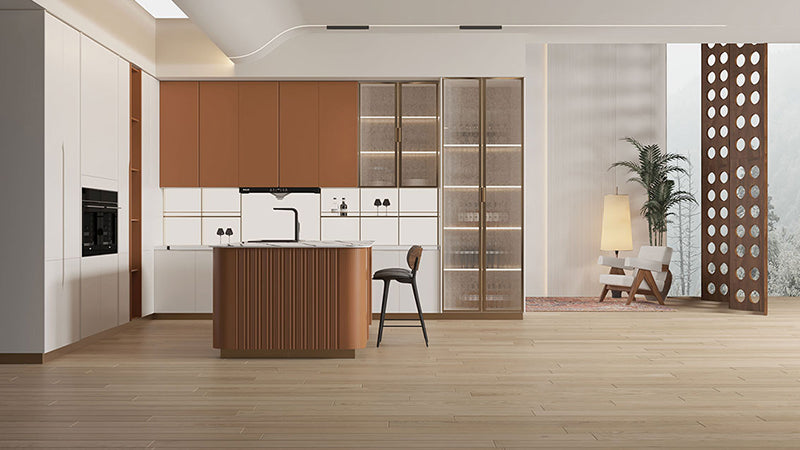
From a design perspective, frameless cabinets are closely associated with modern, contemporary, and European kitchens.
They offer:
- Clean, uninterrupted lines
- Minimal gaps between doors and drawers
- A built-in, architectural appearance
Framed cabinets, on the other hand, often convey a more classic or traditional look, making them popular in farmhouse or heritage-style interiors.
European Frameless Cabinets vs Traditional Framed Styles
European frameless cabinets are designed around precision manufacturing and modular systems. This allows for high consistency, tight tolerances, and sleek aesthetics.
In contrast, framed cabinetry relies more heavily on craftsmanship and decorative elements, which can vary by region and installer.
For modern urban homes and international markets, frameless construction aligns more closely with current lifestyle and design expectations.
Installation and Customization Flexibility
Custom frameless cabinets offer greater flexibility during installation. Because the cabinet box defines the opening, alignment adjustments are more precise.
- Easier appliance integration
- Better alignment in large, continuous cabinet runs
- More efficient handling of uneven walls
This makes frameless systems particularly suitable for large renovation projects and multi-unit developments.
Durability and Long-Term Performance
A common misconception is that framed cabinets are inherently more durable. In reality, modern frameless cabinets use advanced materials and reinforced construction methods that meet or exceed industry durability standards.
High-quality frameless cabinets are designed to:
- Support heavy drawer loads
- Maintain alignment over time
- Perform reliably in high-use kitchens
Durability ultimately depends more on manufacturing quality than on whether a cabinet has a face frame.
Cost, Value, and Market Perception
When comparing costs, framed cabinets may appear more affordable at entry levels. However, frameless kitchen cabinets often deliver better value in mid-to-high-end markets.
- Higher perceived value among modern buyers
- Better resale appeal in contemporary homes
- Stronger differentiation in competitive markets
This is one reason why developers, dealers, and renovation brands increasingly favor frameless systems.

Industry Adoption and Global Trends
Across Europe, Asia-Pacific, and urban North America, frameless cabinets have become the dominant choice for new builds and modern renovations.
Manufacturers such as goldenhome support this shift by combining standardized production with flexible customization, allowing partners to deliver modern frameless solutions at scale.
Conclusion: Which Cabinet System Is Right for You?
The choice between frameless cabinets and framed cabinets depends on design goals, lifestyle needs, and target market.
For modern aesthetics, efficient storage, and long-term value, frameless cabinetry continues to lead. As global kitchen design moves toward cleaner lines and smarter space usage, frameless construction is increasingly seen as the future standard.