Why Maple Kitchen Cabinets Remain a Smart Choice for Modern Kitchens
Understanding the Enduring Appeal of Maple Kitchen Cabinets
Maple kitchen cabinets have remained a consistent favorite in residential and commercial kitchen design for decades. Unlike trend-driven materials that fade quickly, maple offers a rare balance of strength, visual warmth, and adaptability. For homeowners, it represents long-term reliability. For contractors, dealers, and distributors, maple cabinets are a dependable product with stable demand across markets.
As one of the most widely used hardwoods in North American cabinetry, maple wood kitchen cabinets are valued for their tight grain structure, smooth surface, and exceptional durability. These qualities make maple a practical and aesthetically flexible solution for both traditional and contemporary kitchens.

What Makes Maple Wood Ideal for Kitchen Cabinetry?
Maple is classified as a hardwood, meaning it comes from slow-growing trees that produce dense and resilient wood. This density gives maple cabinets superior resistance to dents, scratches, and daily wear compared to many softwood alternatives.
- Uniform, fine grain for a clean and refined appearance
- High structural stability, reducing warping over time
- Excellent compatibility with stains, paints, and modern finishes
- Long lifespan, making it ideal for high-use kitchens
Because of these advantages, solid wood kitchen cabinets made from maple are often positioned as a mid-to-high-tier option, appealing to both quality-conscious homeowners and professional kitchen designers.
Maple Kitchen Cabinets in Different Design Styles
One of maple’s strongest selling points is its adaptability. Whether the project involves a luxury villa, a mid-range residential renovation, or a multi-unit development, maple cabinets can be styled to match a wide range of design preferences.
Modern and Minimalist Kitchens
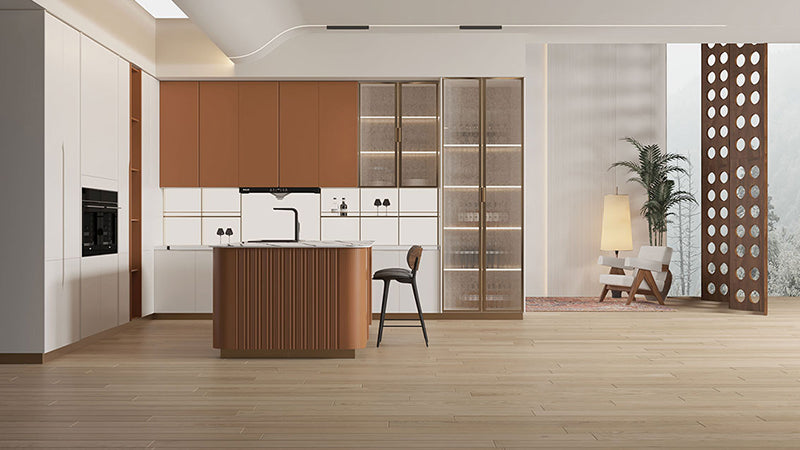
In modern kitchens, maple kitchen cabinets are often finished with light stains, matte lacquers, or soft neutral tones. The natural brightness of maple enhances light reflection, making spaces feel larger and more open. Flat-panel or slab-style doors highlight maple’s smooth texture and subtle grain.
Transitional and Contemporary Designs
For transitional kitchens, maple bridges the gap between classic and modern. Shaker-style doors, soft gray or warm beige finishes, and understated hardware allow maple wood kitchen cabinets to feel both current and timeless.
Classic and Traditional Kitchens
In traditional kitchens, maple is frequently stained to resemble richer woods while maintaining its structural benefits. Decorative moldings, raised panels, and detailed craftsmanship pair well with maple’s consistent grain pattern.
Durability and Long-Term Value for Homeowners
From a homeowner’s perspective, kitchen cabinetry is a long-term investment. Maple kitchen cabinets perform exceptionally well under daily stress, including temperature changes, moisture exposure, and frequent use. This durability reduces the likelihood of early replacement, saving costs over time.
Unlike lower-grade materials, solid wood kitchen cabinets made from maple can be refinished or repainted years later. This flexibility allows homeowners to update their kitchen’s appearance without replacing the entire cabinetry system.

Why Maple Cabinets Appeal to Dealers and Distributors
For kitchen cabinet dealers, distributors, and renovation professionals, maple represents a low-risk, high-demand product category. Its broad market acceptance makes it suitable for various price points and project scales.
- Consistent consumer recognition and trust
- Wide compatibility with custom and semi-custom cabinet systems
- Lower after-sales issues due to material stability
- Strong resale and upgrade appeal in real estate markets
Manufacturers with integrated production capabilities, such as Goldenhome, are able to offer custom maple cabinets with controlled quality standards, stable supply chains, and scalable solutions for international partners.
Custom Maple Cabinets vs. Stock Options
While stock cabinets may meet basic needs, custom maple cabinets provide a higher level of flexibility and value. Customization allows for precise sizing, optimized storage layouts, and tailored finishes that align with specific market or homeowner requirements.
For developers and dealers, offering custom maple solutions enhances project differentiation and increases overall order value. For homeowners, it results in better space utilization and a more personalized kitchen experience.
Finish Options and Color Trends for Maple Cabinets
Maple’s neutral base color makes it highly receptive to a wide range of finishes. Popular choices include natural clear coats, warm honey stains, painted whites, soft grays, and muted earth tones. Unlike some woods, maple maintains a smooth appearance even under lighter paint colors.
This versatility allows maple kitchen cabinets to evolve with changing design trends while retaining their core structural benefits.
A Smart Choice for Today and Tomorrow
Maple kitchen cabinets continue to be a reliable and future-proof option for homeowners, designers, and kitchen professionals alike. Their balance of durability, aesthetic flexibility, and long-term value explains why they remain a staple in both custom and large-scale kitchen projects.
Whether specified for a single home renovation or integrated into a broader distribution strategy, maple wood kitchen cabinets offer stability, quality, and enduring market appeal.