Modern Kitchen Design Mistakes: How to Avoid Common Errors and Create a Timeless Space
Why Modern Kitchen Designs Can Go Wrong
While modern kitchens are known for their clean lines and sleek finishes, there are several common mistakes that can compromise their functionality and comfort. Often, these mistakes stem from focusing too much on aesthetics and not enough on how the kitchen will be used on a daily basis.
Understanding these errors and how to avoid them will help you design a modern kitchen that is both visually appealing and practical.

Mistake 1: Prioritizing Looks Over Function
A major pitfall in modern kitchen design is prioritizing form over function. While modern kitchens emphasize aesthetics, it is important that design does not get in the way of usability.
- Example: Choosing low-maintenance, beautiful materials without considering whether they support your everyday needs, such as counter height or storage accessibility.
- Solution: Always ensure that functional elements like storage, appliance placement, and ergonomics are prioritized before adding decorative features.
It’s essential to balance beauty with practicality so the kitchen works for your lifestyle, not just for photos.
Mistake 2: Too Much Minimalism
Minimalism is a core tenet of modern kitchens, but overdoing it can make the space feel sterile or unwelcoming. When there’s too little decoration or storage, the kitchen may feel cold and uninviting.
- Example: Flat, featureless surfaces without texture or warmth.
- Solution: Incorporate natural textures like wood accents, soft lighting, and carefully selected decor to add warmth and personality while keeping the design clean.
A modern kitchen should feel open and calm, not empty.
Mistake 3: Overlooking Storage Needs
While modern kitchens are often sleek and streamlined, many designs overlook the importance of practical storage. Without adequate storage solutions, your modern kitchen can quickly become cluttered and inefficient.
- Example: Using shallow drawers or relying on open shelving that doesn’t adequately organize kitchen essentials.
- Solution: Integrate smart storage solutions such as pull-out shelves, deep drawers, and hidden compartments to maintain a clean and functional space.
Don’t sacrifice storage for aesthetics—great design should support the way you live.
Mistake 4: Using Cold, Unwelcoming Materials
One common critique of modern kitchens is that they can feel cold or impersonal. While materials like stainless steel, concrete, and glass are typical of modern design, overusing them can create an environment that feels uncomfortable.
- Example: A kitchen dominated by hard surfaces like cold tile floors, metal appliances, and glass cabinetry.
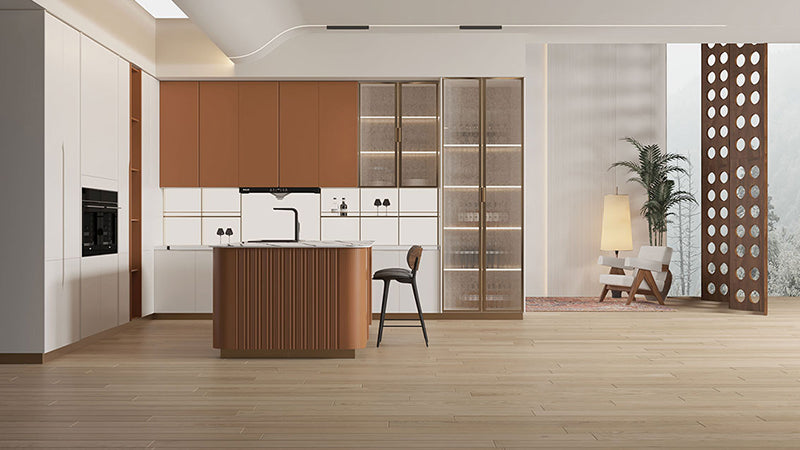
- Solution: Balance cold materials with warm elements like wooden accents, textured countertops, or soft lighting to create a more inviting atmosphere.
The key to a successful modern kitchen is maintaining a balance between sleekness and warmth.
Mistake 5: Poor Lighting Planning
Lighting is often an afterthought in modern kitchens, yet it plays a major role in both functionality and ambiance. Improper lighting can lead to dark corners, inadequate task lighting, and a kitchen that feels lifeless.
- Example: Using only overhead lighting that creates harsh shadows and fails to highlight work areas.
- Solution: Implement a layered lighting approach, combining task lighting (under-cabinet lights, pendant lights), ambient lighting (recessed lights), and accent lighting (accent strips, dimmable lights) to create a balanced, functional atmosphere.
Proper lighting design enhances both form and function, helping you enjoy the kitchen day and night.
Mistake 6: Neglecting Ergonomics
Modern kitchen designs can sometimes overlook the ergonomic needs of the users, resulting in discomfort during cooking and cleaning. For instance, improper counter height or awkwardly placed appliances can lead to strain or inefficient workflows.
- Example: Countertops placed too high or too low, requiring excessive bending or stretching.
- Solution: Ensure that work surfaces are at a comfortable height, appliances are within easy reach, and the work triangle (sink, stove, refrigerator) supports natural movement.
Ergonomics should always be factored into kitchen planning to ensure a space that supports daily use with ease.

Mistake 7: Over-Complicating the Layout
While modern kitchens often feature sleek lines and sophisticated designs, overly complex layouts can lead to confusion and inefficiency. Too many different zones or overly intricate designs can make the space feel cluttered and difficult to navigate.
- Example: A kitchen with excessive corners, unnecessary islands, or overly divided spaces.
- Solution: Keep the layout simple, focusing on functionality and ease of movement. An open-plan design with clear work zones often works best.
The best modern kitchen layouts are intuitive and seamless, designed for ease of use and natural flow.
Conclusion: Creating a Modern Kitchen That Works
A modern kitchen should feel calm, functional, and visually balanced. Avoiding these common design mistakes helps ensure that your modern kitchen is not only stylish but also practical, comfortable, and durable for years to come.
By focusing on functionality, storage, warmth, and simplicity, you can create a kitchen that reflects both your lifestyle and aesthetic preferences—without sacrificing usability.