2 Tone Kitchen Cabinet Design Mistakes (and How to Fix Them)
Why 2 Tone Kitchen Cabinets Sometimes Fail
2 tone kitchen cabinets can elevate a kitchen’s style, but when poorly executed, they can feel chaotic or dated. Most failures stem from design imbalance rather than the two-tone concept itself.
By understanding common two tone kitchen cabinet mistakes, homeowners and designers can create kitchens that feel intentional and cohesive.

Mistake 1: Using Too Many Colors
A true two-tone kitchen should feature two primary cabinet colors. Introducing additional accent colors often leads to visual clutter and confusion.
How to fix it: Limit cabinetry to two main tones and allow countertops, backsplashes, or décor to add subtle variation.
Mistake 2: High-Contrast Upper Cabinets
Dark or bold colors on upper cabinets can visually weigh down the kitchen, especially in smaller spaces. This is one of the most common 2 tone kitchen design mistakes.
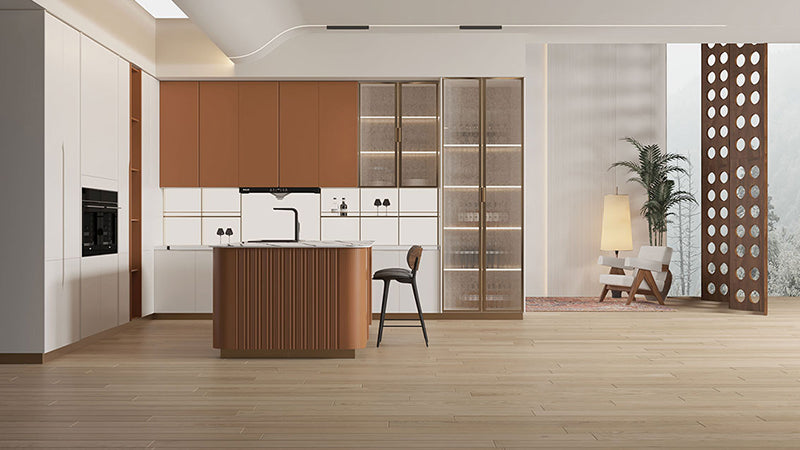
How to fix it: Use lighter tones on upper cabinets and reserve darker colors for lower cabinets or islands.
Mistake 3: Ignoring Lighting Conditions
Lighting dramatically affects how cabinet colors appear. A color that looks balanced in a showroom may feel heavy or dull in low-light kitchens.
How to fix it: Test cabinet samples under actual lighting conditions, including natural and artificial light.
Mistake 4: Poor Color Coordination with Other Elements
Two-tone cabinets must coordinate with countertops, flooring, and walls. When these elements clash, the kitchen feels fragmented.
How to fix it: Ensure cabinet colors share compatible undertones with surrounding finishes.
Mistake 5: Overcomplicating the Layout
Applying two-tone colors across too many cabinet sections disrupts visual flow. This problem is especially common in large kitchens.
How to fix it: Define clear zones for each color, such as perimeter cabinets versus islands.
Mistake 6: Mixing Incompatible Styles
Combining modern cabinet profiles with overly traditional colors—or vice versa—can create stylistic confusion.
How to fix it: Align cabinet profiles, hardware, and finishes with a consistent style direction.
Mistake 7: Following Trends Too Closely
Highly trendy colors may feel exciting initially but can age quickly. This is a long-term concern for two color kitchen cabinets problems.
How to fix it: Choose one neutral tone as a foundation and use the second tone as a flexible accent.

Mistake 8: Forgetting About Long-Term Maintenance
Some colors and finishes show wear, fingerprints, or dust more easily. This practical issue is often overlooked during design.
How to fix it: Select finishes suited to daily use and household habits.
Design Checklist for Successful 2 Tone Kitchens
- Two main cabinet colors only
- Light-to-dark visual hierarchy
- Consistent style and hardware
- Balanced contrast with other finishes
Conclusion: Balance Creates Longevity
The most successful 2 tone kitchen cabinets designs rely on balance, restraint, and thoughtful coordination. Avoiding common mistakes ensures the kitchen feels cohesive rather than trendy.
By prioritizing harmony over boldness, two-tone cabinetry can remain stylish, functional, and appealing for years to come.