How to Design 2 Tone Kitchen Cabinets for Small Kitchens
Why 2 Tone Kitchen Cabinets Work Especially Well in Small Kitchens
Small kitchens present unique design challenges. Limited space, restricted light, and tight layouts require thoughtful choices. When applied correctly, 2 tone kitchen cabinets can visually expand a small kitchen while adding depth and personality.
Rather than overwhelming the room, two-tone cabinetry helps break up solid blocks of color, making compact kitchens feel lighter and more balanced.

Core Design Principles for Small Kitchen Two Tone Cabinets
Successful small kitchen two tone cabinets rely on restraint and strategy. The goal is to enhance space, not divide it.
- Prioritize light reflection
- Limit contrast to one focal area
- Keep transitions simple and intentional
Following these principles ensures the kitchen remains cohesive and visually open.
Best Color Placement for Small Kitchens
Placement is just as important as color choice when designing 2 tone kitchen cabinets for small kitchens.
Light Upper Cabinets, Dark Lower Cabinets
This is the most effective and widely used approach for small kitchens. Light-colored upper cabinets reflect light and reduce visual weight, while darker lower cabinets ground the space.
This combination helps ceilings feel higher and the room feel more open.
Single Accent Area Instead of Full Two-Tone
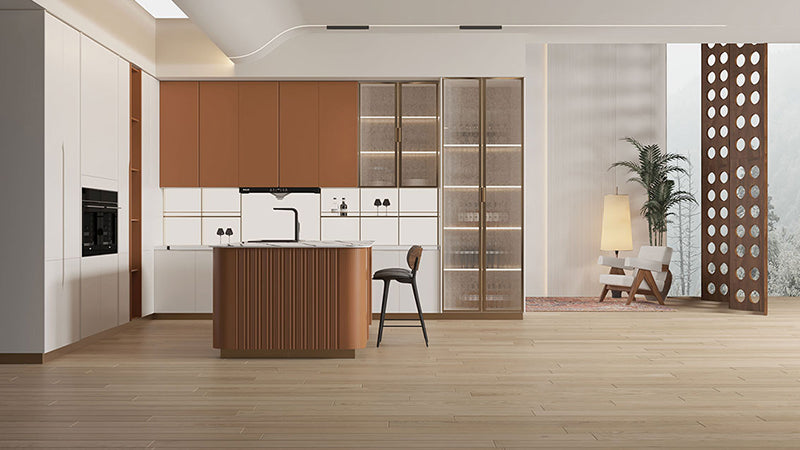
In very compact kitchens, applying the second tone only to the island or a single cabinet run prevents visual clutter while still introducing contrast.
Choosing the Right Colors for Small Kitchens
Color selection should support brightness and continuity. The most successful small kitchen cabinet color ideas often use soft, neutral tones.
Best Light Colors
- White
- Off-white
- Light gray
- Soft beige
Best Dark or Accent Colors
- Charcoal gray
- Navy blue
- Muted green
- Warm wood tones
Avoid pairing two very dark colors, as this can visually shrink the space.
Using Finish and Texture to Enhance Space
In small kitchens, finish selection matters. Matte finishes reduce glare but can feel heavy, while satin or semi-gloss finishes help reflect light.
Combining painted cabinets with subtle wood textures adds warmth without crowding the space.
Cabinet Layout Tips for Two Tone Small Kitchens
Layout decisions reinforce the effectiveness of 2 tone kitchen cabinets in small spaces.
- Limit the number of cabinet breaks
- Align cabinet heights consistently
- Use handle-less or slim hardware to reduce visual noise
Clean lines help maintain a streamlined appearance.

How Two Tone Cabinets Affect Perceived Space
When used thoughtfully, two-tone cabinetry can visually stretch a small kitchen horizontally or vertically. Lighter tones draw the eye upward, while darker tones anchor the base.
This visual hierarchy improves spatial perception without altering the physical layout.
Common Mistakes to Avoid in Small Kitchens
Even well-intentioned designs can fail if contrast is overused.
- Too many contrasting colors
- Strong contrast on upper cabinets
- Ignoring lighting conditions
Keeping the design simple ensures longevity and comfort.
Conclusion: Less Contrast, More Balance
In compact spaces, the best 2 tone kitchen cabinets designs focus on balance rather than boldness. Strategic color placement, light-reflective tones, and minimal transitions help small kitchens feel larger and more refined.
By applying two-tone principles thoughtfully, even the smallest kitchen can achieve depth, style, and long-term functionality.