Kitchen Cabinet Layout for Open Kitchens: How to Design an Efficient Island Layout
Why Open Kitchens Need Smarter Cabinet Layouts
An open kitchen removes physical walls, but it also removes design shortcuts. In an open kitchen cabinet layout, cabinets are visible from multiple angles, and poor planning quickly becomes noticeable.
When an island is introduced, cabinet layout must balance cooking efficiency, circulation, and social interaction—without disrupting any of them.

The Role of the Island in Kitchen Cabinet Layout
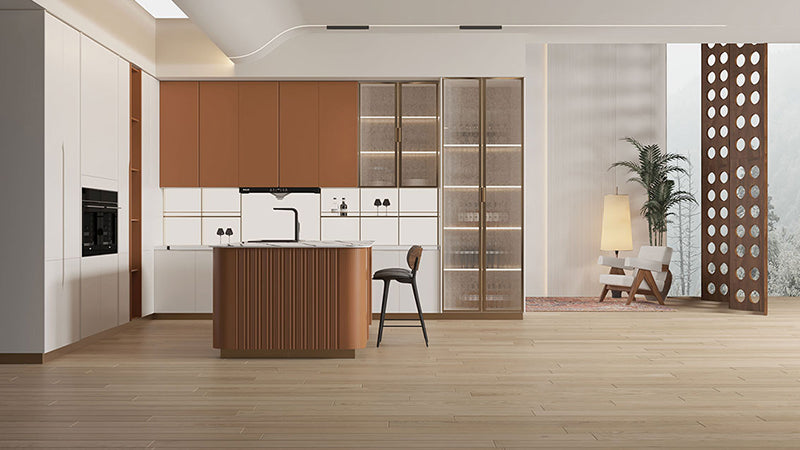
A kitchen island is more than an extra counter. It often becomes the center of activity in an open kitchen.
- Acts as a prep or cooking zone
- Provides additional storage
- Creates a visual boundary between kitchen and living space
- Supports casual dining or social interaction
Because of this, island placement must be carefully coordinated with surrounding cabinets.
Spacing Rules for Island Kitchen Layouts
Clearances are critical in kitchen island cabinet layouts. Insufficient space leads to congestion, while excessive spacing reduces efficiency.
- Minimum aisle clearance: Typically 900–1000 mm for single-cook kitchens
- Multi-user kitchens: 1100–1200 mm improves comfort
- Appliance clearance: Ensure doors and drawers can open without conflict
These distances allow smooth movement around the island while maintaining workflow.
Island Function: Prep, Cook, or Storage?
Before designing island cabinets, it’s essential to define the island’s primary role.
- Prep island: Focus on drawers, trash pull-outs, and landing space
- Cooking island: Requires ventilation planning and heat-resistant materials
- Storage island: Ideal for cookware, small appliances, or pantry overflow
Trying to make an island do everything often results in compromises that reduce usability.
Storage Strategies for Island Cabinets
Island storage works best when it supports nearby tasks.
- Deep drawers for pots and pans
- Shallow drawers for prep tools
- Open shelving on the living-room side for visual lightness
Well-planned island storage reduces traffic to perimeter cabinets.
Open Kitchens and Visual Balance
In open-plan spaces, cabinet layout contributes to the room’s overall balance.
- Symmetrical island placement improves visual order
- Consistent cabinet heights reduce clutter
- Island mass should be proportional to the space
Oversized islands can dominate the room, while undersized islands feel disconnected.
Common Island Layout Mistakes to Avoid
Many layout problems come from prioritizing appearance over function.
- Islands that block main walkways
- Insufficient space between island and appliances
- Adding seating without considering legroom
Each of these issues can be avoided with early layout planning.

Custom Cabinet Layouts for Open Kitchens
Open kitchens benefit from cabinet systems that allow flexible sizing and zoning. Custom or semi-custom cabinetry makes it easier to align island dimensions with surrounding cabinet runs.
Some manufacturers, such as Goldenhome, approach island planning as part of the overall cabinet layout—coordinating storage, proportions, and circulation from the start. The advantage is a kitchen that feels integrated rather than assembled.
Conclusion: Island Layouts That Truly Work
A successful kitchen cabinet layout in an open kitchen depends on clarity of purpose. When island function, spacing, and storage are thoughtfully planned, the kitchen becomes both efficient and inviting.
Rather than adding an island by default, evaluating how it supports daily use ensures the layout enhances—not complicates—the space.